
On this page
MPFL reconstruction rebuilds the ligament on the inner side of the knee that helps keep the kneecap from slipping outward. Its main purpose is to prevent further episodes of instability. It is not a general treatment for pain at the front of the knee. After a kneecap dislocation, a torn ligament on an MRI is only part of the picture. What happened, whether it has happened before, and whether the joint surface was injured all matter. [1] [2]
If you are weighing surgery, start with what you want to change. A kneecap that slips when you turn, pain that persists even when it stays in place, and fear that keeps you off the stairs are three different concerns. You may have more than one. Telling us which matters most helps us discuss what treatment can reasonably do for you. [2] [3]
Did the kneecap slip, or did the knee give way?
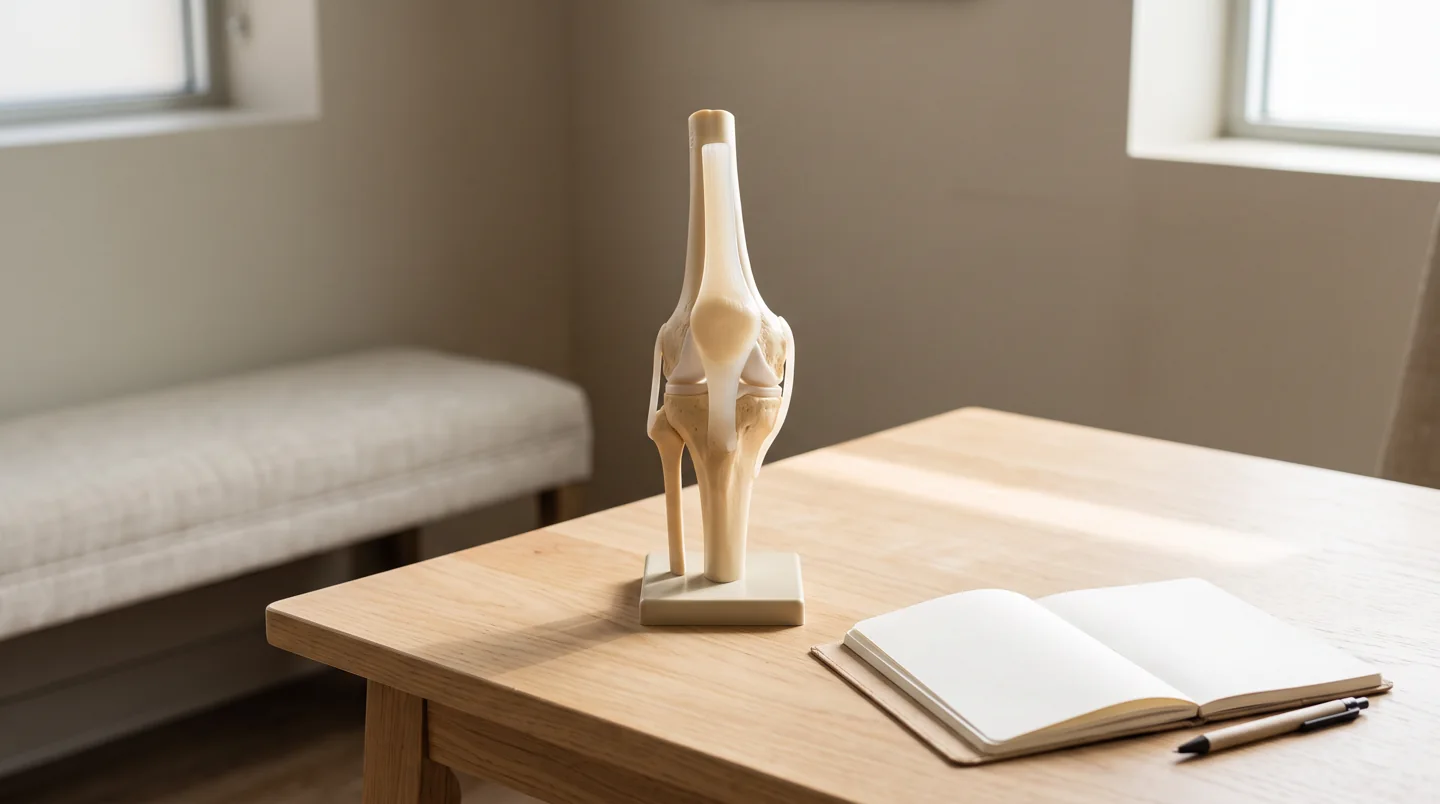
The kneecap, or patella, glides in a groove at the end of the thighbone as you bend and straighten your knee. The medial patellofemoral ligament, or MPFL, connects the inner kneecap to the thighbone. It helps check outward movement, particularly as the knee starts to bend. The shape of the groove and the muscles that control the leg also help guide the kneecap. Our knee anatomy guide shows how these structures fit together. [1] [3]
A dislocation means the kneecap came completely out of its groove. A subluxation means it slipped partway out. The kneecap may slide back on its own, so its position afterward does not tell the whole story. By contrast, saying that the knee “gave way” describes a sensation, not a diagnosis. Pain, swelling, a meniscus injury or an injury to another ligament can also affect how securely you stand or turn. [1] [2] [3]
At a consultation, we want to hear what you saw and felt: Did the kneecap move to the outside? Did anyone have to put it back? How quickly did the knee swell? The examination looks at how the kneecap tracks, how freely the knee moves, leg alignment and other possible injuries. If the knee is too sore or swollen for a useful examination, a repeat assessment can help. [2] [3]
X-rays show bone shape and position. An MRI can show the ligament, the joint surface and a loose piece of cartilage or bone. Finding a cartilage injury may change the next decision even if the kneecap already feels steadier. A useful question when reviewing images is: “Which finding explains my symptoms, and which finding changes my options?” [2] [3]
After a first dislocation: rehabilitation or an early surgical discussion?
Not everyone needs reconstruction after a first episode. If the risk of another dislocation appears low and there is no joint-surface injury that needs treatment, structured rehabilitation is a reasonable option. It can help you regain knee motion, walk comfortably, rebuild thigh and hip strength, and recover control when you turn. A brace may be considered for short-term support; it has no clear long-term advantage after a first dislocation. [1] [4]
A loose or displaced piece of cartilage, sometimes with bone attached, changes the discussion. The question is not just whether the ligament will heal. It is also whether the piece can be fixed to restore the surface the kneecap glides on. If surgery is being considered for that injury, ask whether stabilizing the kneecap at the same time would help. Several risk factors for another episode, especially with ongoing symptoms, can also justify discussing surgery early. [2] [4]
Choosing rehabilitation does not mean waiting indefinitely for another dislocation. Agree on what improvement would look like and when to reassess. For example, you may be walking more easily but still feel the kneecap shift when you turn. Or you may have had no further slips because you have stopped doing nearly everything that used to provoke them. Those are different outcomes to bring to follow-up. [3] [4]
For families, it helps to distinguish repair, which mends the injured ligament, from reconstruction, which uses a graft to replace its function. In one study of children after a first dislocation, early results favored repair over bracing for preventing another dislocation. At ten years, researchers found no statistically clear difference in redislocations or knee function among the 46 of 74 children they could reassess. This was a study of repair, not a test of reconstruction for repeated dislocations. [4] [5]
When the kneecap keeps slipping
Repeated outward dislocations, or partial slips that continue to limit daily life despite rehabilitation, are a reason to discuss reconstruction. The case for surgery is stronger when your description and examination both point to an unstable kneecap. The number of episodes is not the only consideration. How readily they happen, what treatment you have tried and which activities you have given up matter, too. [3] [6]
For someone whose bones have finished growing, who has recurrent instability and who does not have substantial arthritis or a major bone alignment problem, reconstructing the MPFL alone is an established surgical option. If longstanding pain is the main problem, the expected benefit is less clear: pain can persist or even worsen despite better stability. Ask what might still hurt if the operation succeeds in keeping the kneecap in place. [2] [6]
When would a bone procedure be added?
A reconstructed ligament can check an outward slip, but it cannot deepen a shallow groove or lower a kneecap that sits unusually high. A high kneecap may not enter the groove until farther into a bend. The position of the tendon attachment on the shin, or a pronounced twist or angle in the leg, can also affect the direction the kneecap travels. A measurement on a scan is not, by itself, a reason to move bone. [2] [3] [6]
In selected patients, a surgeon may recommend moving the small piece of shinbone where the kneecap tendon attaches. This is called a tibial tubercle osteotomy, or TTO. It can change the direction of pull or lower the kneecap. Reshaping a severely abnormal groove is a different procedure, considered in selected patients who have finished growing. If a combined operation is proposed, ask the surgeon to show you the problem each part would correct and explain what might happen if that part were left out. [1] [3] [6]
For a growing teen, the growth plates near the knee change which procedures are appropriate. Two teens of the same age may have different amounts of growth remaining. The evaluation should address both the risk of further dislocations and how any proposed operation would protect those growth areas. Some bone procedures may need to wait; a growth-preserving ligament procedure may be an option if stabilization is appropriate. [2] [4] [6]
What did reconstruction change at three years?
A randomized trial followed 61 people aged 12 to 30 who had experienced at least two outward dislocations of the same kneecap. The researchers excluded people with certain high-risk bone features, including a severely misshapen groove. Everyone had arthroscopy, a camera examination inside the knee, and active rehabilitation. The treatment difference was whether the surgeon also reconstructed the MPFL. Fewer patients reported ongoing instability with reconstruction at one year. The three-year report followed the same people. [7] [8]
At three years, 5 of 30 people in the reconstruction group reported persistent kneecap instability, compared with 15 of 28 available for follow-up in the group without reconstruction. The outcome was the patient’s report of ongoing instability, not a count of independently confirmed complete dislocations. People in both groups reported better knee function than before treatment. The study did not find a statistically significant difference between groups on the knee-function questionnaires. [8]
If avoiding another slip is your priority, that difference matters. If your main goal is less pain or better performance, the trial does not show the same clear advantage. It was small and was not designed to settle every functional question. Its results are not a personal forecast, particularly after a first dislocation or when a major bone problem also needs attention. [7] [8]
What the operation involves, and what can go wrong
A surgeon uses a graft, often a strip of tendon from your own body or from a donor, to recreate the restraint along the inside of the kneecap. The goal is to allow normal glide while limiting excessive outward movement, not to hold the kneecap rigidly in place. Graft position and tension matter. Arthroscopy may also be used to inspect the joint or treat a separate injury. Ask which steps are planned and whether any depend on what the surgeon finds. [1] [3] [4]
Possible problems include stiffness, pain around the kneecap, another slip or dislocation, and, less commonly, a kneecap fracture. Infection and blood clots are also surgical risks. A knee can be more stable yet remain difficult to bend or uncomfortable on stairs. Some complications need further treatment or another operation. Ask which risks are most relevant to the proposed procedure and to your own health history. [1] [2] [3] [8]
There is also a trade-off to continuing without surgery: another dislocation can injure cartilage, and uncertainty about the knee may keep you from activities you value. Reconstruction cannot undo existing cartilage damage or promise a pain-free knee. Comparing the two paths means weighing the effects of another episode against the risks and recovery demands of surgery. [1] [2] [6]
Recovery: milestones for daily life, work and sport
Early recovery focuses on protecting what was treated while regaining motion and thigh-muscle control. Before surgery, ask how you would get around your home, manage stairs and reach the bathroom. Your team should explain any brace, crutch or weight-bearing limits for the actual procedure. Instructions for an isolated reconstruction may not fit a knee that also needs bone or cartilage to heal. [1] [4] [6] [9]
Later goals depend on what you need your knee to do. Returning to a seated job is different from standing through a shift, climbing ladders or carrying a child downstairs. Tell your therapist about the hardest part of the day, not just your job title. Ask how you will know when you can walk without a limp, manage steps with control and tolerate the demands of a full day. Discuss driving separately rather than treating a return-to-work date as clearance to drive. [6] [9]
For sport, a date on the calendar does not establish readiness. Your care team can assess motion, strength, balance and how well you control the leg as you land or change direction. Confidence matters, too. Being able to run straight ahead is a different goal from reacting to another player during a game. Ask what your team needs to see before you move from practice to competition. [6] [9]
In one observational study, among those who reported a return-to-sport time, the average was 9.5 months after ligament reconstruction alone and 12.9 months after reconstruction plus TTO. The combined group had more cartilage damage and other procedures; patients were not assigned at random. These averages give a sense of the commitment, not a deadline or a reason to leave out a needed procedure. [9]
Preparing for a knee instability consultation
For a consultation with Eric S. Millstein, MD, bring any available images as well as their reports, notes from prior knee treatment and a short account of the first and most recent episodes. Tell us if the other kneecap has slipped or if close relatives have had similar problems. If you tried physical therapy, it helps to know what improved, what did not and what you still avoid. [2] [3]
Bring one everyday goal and, if relevant, one work or sports goal. “I want to carry groceries down my steps without worrying about a slip” tells us more than “I want a better knee.” If you are seeking a second opinion, bring the proposed plan so we can discuss the reasons for rehabilitation, an isolated reconstruction or an additional procedure.
Our Santa Monica consultation office is at 2901 Wilshire Blvd, Suite 300, Santa Monica, CA 90403. A consultation is for evaluating knee instability and discussing options. If surgery is proposed, confirm the procedure and surgical location with your care team. Request an appointment or call our office at 310-595-1030.
Questions to ask your physician
Bring the questions that matter most to you. Before leaving, ask who will help with the next step and when you will review the plan together.
- What makes you think my kneecap is slipping? Could something else explain the pain or giving way?
- Is there a loose fragment or cartilage injury? How do my bone shape, alignment or growth plates affect my options?
- What could rehabilitation achieve without surgery? What would make us reconsider, and when?
- If you recommend reconstruction, why this graft and why this procedure alone or with another operation? Which symptoms might remain?
- How should I prepare, what anesthesia options are appropriate, and how do my other medical conditions affect the plan?
- Who will give me individualized instructions about my medicines, including blood thinners, diabetes medicines or a GLP-1 medicine if I take one?
- Will I need a ride or help at home? What milestones will you use for stairs, driving, work and the activities I want back?
- Who can help me check expected costs for the procedure, anesthesia, facility, physical therapy and follow-up?
- When is follow-up? Which symptoms after an injury or after surgery need urgent assessment, and how do I reach the treating team if they occur?
Learn More
- Hospital for Special Surgery. Medial Patellofemoral Ligament (MPFL) Reconstruction. 2023.
- Blønd L, et al. Management of first‐time patellar dislocation: The ESSKA 2024 formal consensus—Part 1. 2025.
- Post WR, Fithian DC. Patellofemoral Instability: A Consensus Statement From the AOSSM/PFF Patellofemoral Instability Workshop. 2018.
- Balcarek P, et al. Management of first‐time patellar dislocation: The ESSKA 2024 formal consensus—Part 2. 2025.
- von Heideken J, Arendt E, Askenberger M. Long-term Outcomes of Knee Brace Versus Operative Medial Patellofemoral Ligament Repair in Children With First-Time Traumatic Patellar Dislocation: A 10-Year Follow-up From Skeletal Immaturity to Adulthood. 2026.
- British Orthopaedic Association. BOASt - The Surgical Management of Recurrent Patellar Instability. 2020.
- Straume-Næsheim TM, Randsborg PH, Mikaelsen JR, Årøen A. Medial patellofemoral ligament reconstruction is superior to active rehabilitation in protecting against further patella dislocations. 2022.
- Straume-Næsheim TM, Randsborg PH, Nilsgård TL, Årøen A. Medial Patellofemoral Ligament Reconstruction vs Nonoperative Treatment for Recurrent Lateral Patellar Dislocation: Three-Year Results From a Randomized Controlled Trial. 2026.
- Kew ME, et al. Patients undergoing medial patellofemoral ligament reconstruction return to sport sooner and at a higher level than those undergoing concomitant tibial tubercle osteotomy. 2025.