
On this page
Santa Monica sports medicine expert, Dr. Millstein, is dedicated to providing patients with outstanding service and personalized care to make the entire meniscus tear treatment process as easy as possible. Because of his advanced training with arthroscopic and minimally invasive surgery, Dr. Millstein is regarded as one of the premier orthopedic surgeons in Los Angeles.
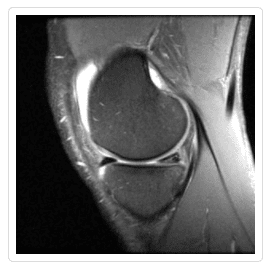
What Is A Meniscus Tear?
Meniscus tears are often the result of fast starts, stops, cuts, and pivots. Meniscus tears can also happen when trauma is applied directly to the knee, like a football tackle or if a player was to squat and twist their upper body, while their legs were being held. However, many people also get meniscus tears without any acute injury or trauma, but as a result of everyday wear and tear on the knee.
Should I Have Meniscus Tear Surgery?
Many meniscus tears can be managed without surgery. Your options depend on how the tear happened, its location and pattern, and how it affects your knee. Physical therapy may be an option. If the knee stays painful or swollen, or if it catches or locks, an orthopedic evaluation can help you decide what to do next. If a displaced tear blocks the knee from moving, a surgeon may discuss earlier treatment.
If you are weighing options for an arthroscopic meniscus procedure, bring your MRI report, the images if you have them, and a list of activities you hope to get back to. Our questions about meniscus repair versus trimming can help you prepare for that conversation.
Meniscus tear — arthroscopic surgery patient story
A patient and Dr. Eric Millstein discuss her meniscus tear and arthroscopic knee surgery.
How Is Meniscus Tear Surgery Performed?
Meniscus tear surgery is performed under general anesthesia. Additionally, Dr. Millstein may also request local anesthetic to be used, which will numb the knee and lessen post-operative pain. Meniscus tear surgery is performed arthroscopically; small incisions are made in the knee into which small instruments and a camera are inserted in order to visualize the meniscus and perform the procedure. The surgery lasts about one hour.
During a meniscus repair, the surgeon uses stitches to hold the torn edges together so they can heal. If the damaged portion cannot be repaired and surgery is appropriate, the surgeon may trim that portion while preserving as much healthy meniscus as possible. This is called a partial meniscectomy. Ask how the tear’s location, shape and tissue quality affect your options, and what each option would mean for recovery. If you’re still trying to understand your symptoms or MRI wording, start with our guide to meniscus injury symptoms and tear location.
Arthroscopic meniscus surgery — surgical demonstration
Dr. Eric Millstein explains a meniscus procedure with footage from arthroscopic knee surgery.
Tears near the outer edge of the meniscus may have better healing potential because that area has a better blood supply. MRI can help the surgeon plan, and looking at the tear directly during arthroscopy can help confirm which option is possible.
A more detailed comparison of these two approaches can be found here.
When Does the Meniscus Need to Be Removed?
Why remove a torn meniscus?
Dr. Eric Millstein discusses why a damaged portion of the meniscus may be removed during surgery.
After Meniscus Tear Surgery
Because the surgery may cause temporary pain and discomfort, pain medication is generally provided for up to three days after the surgery. Cold packs are used to reduce swelling and manage pain. In cases of a meniscus repair, a knee brace is used to keep the leg straight and partially control movement.
Rehab Plan for Meniscus Tear
For tears that undergo debridement, the more common option, rehabilitation and physical therapy is generally not required. Patients are typically walking normally at 1 week, 80% back to their normal activities at 1 month, and 90% at 2 months, sports included.
For tears that are repaired the rehabilitation is longer. The main focus of meniscus tear physical therapy is to decrease swelling, regain full range of motion, and build muscle strength. While results may vary depending on the patient’s unique characteristics and the extent of the initial injury, below are some general guidelines:
Week 1 – 6: Rehab in brace (non weight-bearing exercises)
Week 6 – 12: Minimal-impact weight bearing exercises
Week 12 – 16: Low-impact weight bearing exercises
Week 17: Full exercise
It is important to remember that completing physical therapy and being ready to compete in sports are two different things entirely. The guidelines for returning to sports are fairly rigorous, which is why you must make sure you have Dr. Millstein´s clearance before competing at top speed.
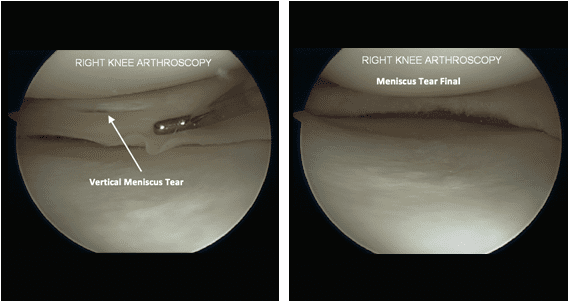
Meniscus Tear Gallery
To find more before and after pictures of meniscus tear surgery, please visit Dr. Millstein’s knee arthroscopy gallery.
If you are in need of meniscus tear treatment or would like to know more, contact Dr. Millstein, the premier orthopedic surgeon in Los Angeles.