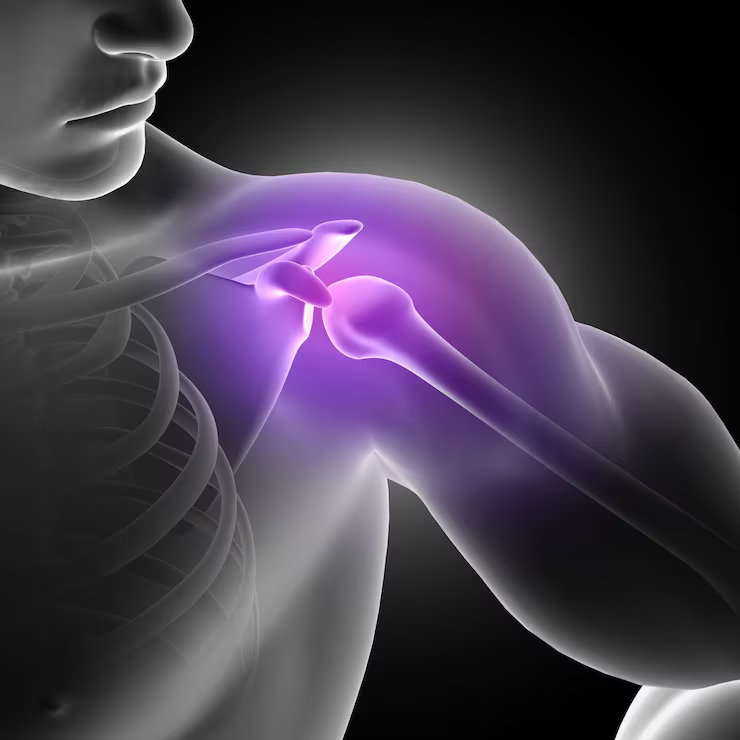
A large part of my practice is treating shoulder injuries. Some are acute shoulder injuries that happen from a fall or an accident while playing sports. Other injuries are more of a chronic nature that occur over time and increase over time without any one incident that precipitates the pain. The shoulder is the ball and socket joint. The ball sits on top of the arm bone called the humerus and the socket sits on one of the corners–one of the three corners of what’s called the shoulder blade that sits on the upper part of our chest. Ball and socket of the shoulder makes for a very loose joint allowing us to put our arm anywhere in space and perform a lot of athletic activity. For that reason, it’s very important to keep the ball stable or centered in the socket and we have ligaments that hold the bones together and just as important we have what are called the rotator cuff muscles. There’s a big misperception about what the rotator cuff is. Basically, it’s a series of four muscles–one on the front, one on the top and two in the back that connect the balls of the socket. They are based on the shoulder blade and they literally form a cuff of tissue around the ball and they help to rotate the shoulder in addition to keeping the shoulder stable within its socket. For that reason, they have been named the rotator cuff. Those are commonly injured muscles or tendons both from acute injuries and from chronic wear and tear type injuries. One anatomic part that people don’t usually realize is an integral part of the shoulder is the bicep. So in this model here, the biceps is the muscle that we all think about from doing curls that actually goes up into the shoulder and acts as an integral part of the function of the shoulder acting almost like a fifth rotator cuff muscle. So here’s the third bone that makes up the shoulder called the clavicle. The clavicle we often call the collarbone. That connects our chest to the shoulder blade, holding the shoulder out from the body so that it doesn’t collapse forward and providing additional stability to the shoulder joint.

Shoulder Pain Doesn’t Have to Keep You on the Sidelines
The shoulder is one of the most complex joints in the body, allowing an incredible range of motion—but that flexibility also makes it more vulnerable to injury.